

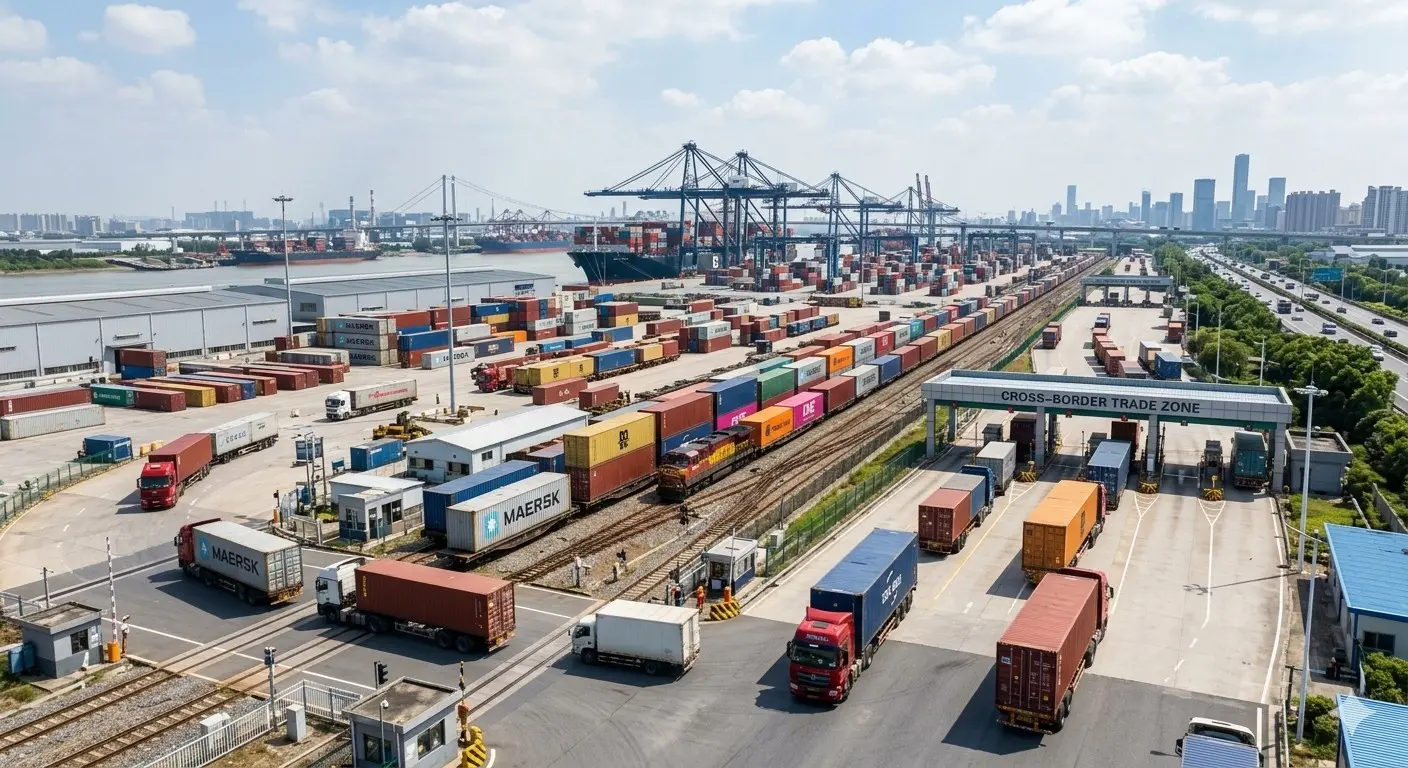
Cross-border trade is changing how companies, investors, and governments move money around the world. Businesses no longer think only in local terms. They’re building supply chains across continents, investing in foreign markets faster than ever, and chasing growth wherever demand exists. That shift is reshaping international investment trends in ways many people didn’t expect.
Cross-border trade is driving international investment because companies want faster market access, diversified supply chains, lower operational costs, and stronger global reach. As trade barriers evolve and digital commerce expands, investors are moving capital into logistics, manufacturing, infrastructure, fintech, and emerging economies to stay competitive in 2026 and beyond.
What Is Cross-Border Trade and Why Does It Matter?
Cross-border trade means the exchange of goods, services, technology, or capital between businesses and consumers in different countries.
It sounds straightforward. But the impact runs much deeper.
When companies expand beyond domestic markets, they usually need new factories, warehousing systems, logistics partnerships, payment infrastructure, legal support, and local marketing. That means investment follows trade almost automatically.
A business selling products internationally might open regional offices overseas. Investors notice that movement quickly because trade activity often signals long-term economic opportunity.
Here’s the thing most people overlook: international investment no longer follows only big corporations. Smaller brands, e-commerce startups, SaaS companies, and niche manufacturers now participate in global trade almost from day one.
That changes everything.
A clothing brand in one country can source materials from another, manufacture in a third, and sell globally through digital platforms. Investors see that scalability and move capital accordingly.
Cross-border commerce trends are now influencing:
Foreign direct investment
International supply chains
Currency flows
Manufacturing expansion
Infrastructure spending
Digital payment ecosystems
In my experience, the companies adapting fastest are not always the largest ones. They’re usually the businesses that understand how global demand shifts before competitors do.
Why Cross-Border Trade Matters in 2026
The world economy in 2026 looks very different compared to even five years ago.
Several major changes pushed international investment toward cross-border trade opportunities:
Supply Chains Are Being Rebuilt
Many companies learned the hard way that relying on one country for manufacturing creates risk. Businesses are now spreading production across multiple regions.
That means investors are pouring money into emerging manufacturing hubs, transport systems, and regional distribution centers.
A logistics company operating near major shipping corridors might suddenly become more valuable than a traditional retail chain. That would’ve sounded strange a decade ago.
Not anymore.
Digital Trade Is Exploding
Cross-border e-commerce has reduced the need for businesses to establish massive physical operations before entering foreign markets.
A mid-sized company can now reach international customers through online platforms, localized advertising, and global payment tools.
Because of that, international market expansion is happening faster than traditional analysts predicted.
Governments Want Foreign Capital
Many countries are offering incentives to attract global investment linked to trade growth.
Tax benefits, export zones, simplified regulations, and infrastructure programs are becoming common tools used to attract multinational businesses.
What most guides miss is this: governments are competing for investment almost like brands compete for customers.
That competition is accelerating trade-focused development.
Investors Want Geographic Diversification
Economic uncertainty pushes investors to spread risk across different regions.
Cross-border trade creates new opportunities in industries such as:
Renewable energy
Smart manufacturing
Fintech
Shipping technology
Cold storage logistics
Semiconductor production
A portfolio heavily tied to one domestic market now feels risky to many institutional investors.
Definition Box
Foreign Direct Investment (FDI): Money invested by a company or investor into business operations located in another country.
How Cross-Border Trade Reshapes International Investment — Step by Step
1. Businesses Identify Overseas Demand
Companies first notice growing demand in international markets.
Sometimes it starts small. A skincare brand suddenly receives large numbers of overseas orders. A software company sees unexpected subscriptions from another region.
That demand creates expansion pressure.
2. Infrastructure Investment Follows
Once trade increases, businesses need operational support.
That usually includes:
Warehousing
Transportation systems
Payment processing
Distribution centers
Customs partnerships
Investors step in because these sectors become financially attractive.
3. Local Partnerships Grow
Foreign companies rarely succeed alone in unfamiliar markets.
They often invest in partnerships, acquisitions, or regional joint ventures to speed up growth.
This creates a ripple effect across industries.
4. Capital Flows Into Emerging Economies
Countries with improving trade capacity begin attracting international capital.
Manufacturing expansion in Southeast Asia is one example people talk about often. Parts of Eastern Europe, Africa, and Latin America are also seeing growing investor attention.
5. Technology Accelerates Everything
AI-driven logistics, digital trade platforms, automated customs processing, and fintech systems reduce friction in global commerce.
Faster trade means faster investment cycles.
And honestly, that pace surprises even experienced investors sometimes.
Expert Tip
Businesses entering cross-border markets too aggressively often fail because they underestimate cultural buying behavior. Expanding globally isn’t just about pricing or shipping speed. Customer trust works differently in every market.
What Industries Benefit Most From Cross-Border Investment Trends?
Some sectors are gaining far more attention than others.
Logistics and Transportation
This one is obvious, but still underestimated.
Ports, rail systems, trucking fleets, warehouse automation, and shipping software are becoming investment magnets because global trade depends on efficient movement.
A delayed shipment can now disrupt entire supply chains across multiple countries.
Financial Technology
Cross-border payments remain surprisingly inefficient in many regions.
Fintech companies solving international payment delays, currency conversion issues, and trade financing gaps are attracting major funding.
Renewable Energy
Global manufacturing expansion requires energy infrastructure.
Investors are increasingly targeting solar, battery storage, and energy transport systems tied to international industrial growth.
Semiconductor Manufacturing
Countries want more control over chip production capacity.
That’s driving international partnerships, factory construction, and technology-sharing agreements across several regions.
E-Commerce Infrastructure
Warehousing networks, localized fulfillment, and last-mile delivery systems are now central to global retail expansion.
Without them, cross-border trade slows down fast.
The Counterintuitive Shift Most Investors Didn’t Expect
Here’s a hot take that probably sounds backward at first:
Globalization is actually creating stronger regional investment hubs.
Many businesses are moving away from depending on one massive centralized supply chain. Instead, they’re building smaller regional networks closer to customers.
So while trade remains global, operations are becoming more localized.
That creates investment opportunities in secondary cities and developing industrial zones that were previously ignored.
I’ve seen investors focus too heavily on famous financial centers while missing growth happening in emerging logistics corridors. Sometimes the quieter markets produce stronger long-term returns.
A Realistic Example of How Cross-Border Trade Changes Investment Decisions
Imagine a mid-sized electronics company based in Europe.
At first, it imports components from Asia and sells domestically. Business grows faster than expected, especially online.
Soon, shipping delays start hurting profits.
Instead of continuing with the same setup, the company decides to:
Invest in regional warehouses
Open a distribution center abroad
Partner with local suppliers
Use international payment platforms
Expand into neighboring countries
Now investors see multiple new revenue channels, not just one business.
Suddenly, logistics firms, fintech companies, warehouse developers, and regional suppliers all become part of the investment story.
That’s how cross-border trade reshapes international investment trends in real life.
Expert Tip
Companies expanding internationally should prioritize operational resilience over rapid expansion. Fast growth looks impressive on paper, but supply chain instability can wipe out profits surprisingly quickly.
What Risks Still Exist in Cross-Border Trade?
Global trade creates opportunity, but it also introduces risk.
Political Uncertainty
Trade regulations change constantly.
Tariffs, sanctions, and geopolitical tensions can impact investment returns almost overnight.
Currency Volatility
Exchange rate fluctuations affect profitability, especially for companies operating across multiple regions.
Compliance Costs
International expansion involves taxes, customs rules, labor laws, and licensing requirements that many businesses underestimate.
Supply Chain Disruption
Natural disasters, labor shortages, or shipping bottlenecks can interrupt operations globally.
One weak link can slow everything down.
Data and Cybersecurity Concerns
Digital trade relies heavily on cloud infrastructure, financial technology, and connected systems.
That also increases cybersecurity exposure.
How Smaller Businesses Are Joining Global Investment Trends
Years ago, international trade was dominated by giant corporations.
That barrier is lower now.
A small business can use digital marketplaces, third-party logistics providers, and online advertising to reach global customers without massive infrastructure spending.
That shift matters because investors increasingly look for scalable businesses capable of international growth early in their lifecycle.
A startup with strong cross-border demand might attract funding faster than a larger company limited to one market.
And honestly, that’s probably one of the biggest structural changes happening right now.
What Actually Works for Businesses Expanding Internationally?
From what I’ve seen, businesses succeed internationally when they focus on adaptation instead of pure expansion.
That means:
Understanding regional buying habits
Building flexible supply chains
Using local partnerships wisely
Investing in logistics early
Managing currency exposure carefully
Too many companies assume success at home automatically translates abroad.
Usually, it doesn’t.
The businesses winning globally are the ones willing to adjust operations market by market.
Expert Tip
Cross-border trade success often depends more on operational speed than product quality alone. Customers might forgive higher prices, but delayed delivery and inconsistent communication kill trust quickly.
People Most Asked About Cross-Border Trade and Investment Trends
Why is cross-border trade increasing globally?
Digital commerce, improved logistics technology, rising internet access, and international consumer demand are driving global trade growth. Businesses can now enter foreign markets faster and cheaper than before.
How does cross-border trade affect investors?
Cross-border trade creates investment opportunities in logistics, infrastructure, fintech, manufacturing, and regional development. Investors follow industries benefiting from rising international demand.
Which countries benefit most from global trade expansion?
Countries with improving infrastructure, stable regulations, skilled labor, and export-friendly policies tend to attract the most investment tied to global trade.
Is cross-border trade risky for businesses?
Yes, there are risks involving regulation, currency fluctuations, shipping disruptions, and political instability. Companies that diversify suppliers and markets usually manage those risks better.
How does technology support international trade?
Technology improves logistics tracking, payment processing, inventory management, customs documentation, and customer communication. That reduces delays and operational costs.
Why are investors focusing on supply chains now?
Recent disruptions exposed weaknesses in centralized manufacturing systems. Investors now prioritize resilient and diversified supply chains that can handle unexpected disruptions.
Can small businesses benefit from international trade?
Absolutely. E-commerce platforms, digital marketing, and global shipping services allow smaller businesses to reach international customers without building large overseas operations.
Final Thoughts
Why cross-border trade is reshaping international investment trends comes down to one simple reality: businesses follow demand, and investors follow growth.
Global commerce is no longer controlled only by multinational giants. Smaller companies, digital platforms, logistics networks, and regional manufacturing hubs are all shaping the next phase of international investment.
The businesses and investors adapting early will probably gain the biggest advantage over the next several years. Those waiting for stability before expanding may find themselves constantly behind faster-moving competitors.
And if you ask me, the biggest winners in 2026 won’t necessarily be the companies with the largest budgets. They’ll be the ones that understand how quickly global trade patterns are evolving.
Our network platforms also help businesses strengthen brand visibility through Guest Posting Services, press release publishing, and local SEO growth. Companies looking for high authority backlinks, stronger SEO ranking, instant publishing, and wider media coverage can explore services from PR Wires and Rank Locally UK to improve organic traffic, digital presence, and online authority across competitive markets.