

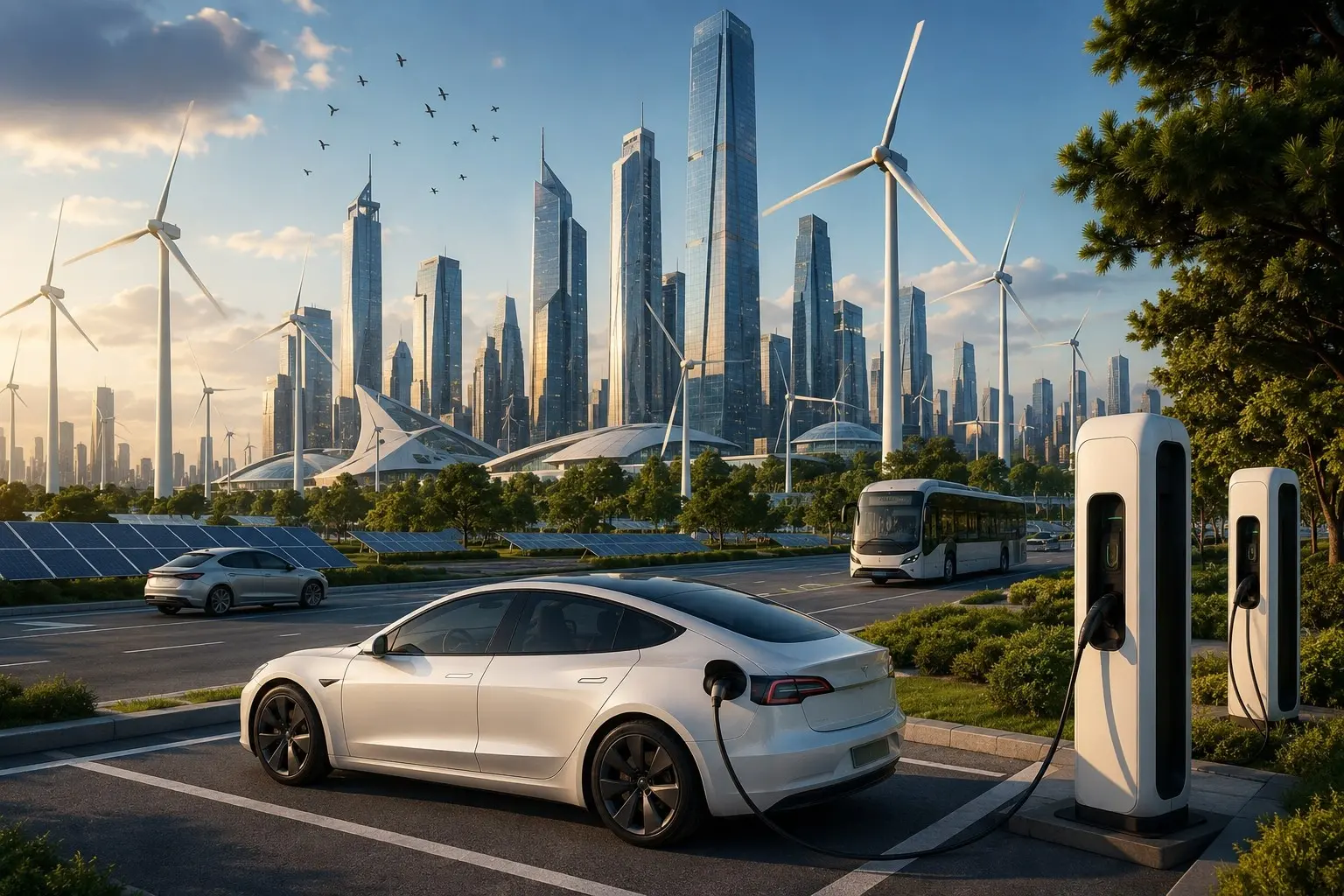
Electric mobility is changing how countries, investors, and businesses think about transportation, energy, and long-term economic growth. From battery factories to charging infrastructure, money is moving fast toward electric mobility because investors see it as more than a transport trend — they see it as a global industrial shift.
What surprises many people is this: the biggest opportunity often isn’t the electric car itself. In most cases, the real investment momentum comes from battery technology, rare mineral supply chains, software systems, and charging networks that support the entire ecosystem.
Electric mobility is reshaping international investment trends because governments, corporations, and financial institutions are funding cleaner transportation systems, battery production, and charging infrastructure at record levels. Investors see electric mobility as a long-term growth sector tied to energy security, climate goals, smart cities, and future consumer demand.
What Is Electric Mobility?
Electric Mobility: A transportation system that uses electricity instead of fossil fuels to power vehicles such as cars, buses, scooters, trucks, and trains.
Electric mobility includes far more than passenger vehicles. It covers public transport fleets, logistics delivery systems, battery manufacturing, renewable energy integration, and smart charging technology. That’s why international investment trends are shifting so quickly toward this sector.
Five years ago, many investors treated electric transportation like a risky experiment. That attitude has changed dramatically. Large funds now consider electric mobility part of mainstream infrastructure and industrial development.
Here’s the thing most people overlook: electric mobility isn’t only about climate concerns. Countries also see it as a way to reduce oil dependence, create manufacturing jobs, and strengthen energy security.
Expert Tip
If you’re tracking international investment trends, don’t focus only on vehicle brands. Watch battery suppliers, charging infrastructure providers, and energy storage companies. Those areas often attract steadier long-term capital.
Why Electric Mobility Matters in 2026
By 2026, electric mobility has become tied directly to national economic planning. Governments are competing to attract battery plants, semiconductor facilities, and clean transportation manufacturing hubs.
That competition is reshaping global capital flows.
Investors who once prioritized traditional automotive manufacturing are now shifting funds into electric mobility ecosystems. You can see this in rising investments across Asia, Europe, North America, and parts of the Middle East.
Several factors are driving this change:
Rising Government Incentives
Many countries now offer tax credits, production subsidies, and infrastructure grants for electric mobility projects. Investors usually follow policy support because it lowers risk and increases market stability.
A realistic example would be a logistics company replacing diesel delivery vans with electric fleets in multiple cities. Investors often support these projects because operating costs can decline over time, especially where fuel prices remain volatile.
Consumer Demand Keeps Growing
Electric vehicle adoption isn’t limited to luxury buyers anymore. Mid-range electric cars, scooters, and commercial vehicles are becoming more accessible.
In my experience, this accessibility matters more than flashy innovation. Once average consumers believe electric transport saves money long term, adoption speeds up quickly.
Energy Markets Are Changing
Electric mobility connects directly with renewable energy expansion. Charging stations powered by solar or wind systems are becoming attractive investment opportunities on their own.
Oddly enough, some energy companies that once resisted electric mobility are now heavily investing in charging infrastructure. That shift says a lot about where executives think future profits will come from.
Supply Chain Competition
Battery minerals such as lithium, nickel, and cobalt have become strategic assets. Countries want stronger control over these supply chains because transportation increasingly depends on them.
That’s why international investment trends now include mining partnerships, battery recycling projects, and regional manufacturing agreements.
How Electric Mobility Is Changing International Investment Trends
This shift didn’t happen overnight. Investors gradually realized electric mobility influences multiple industries at once.
Here’s how the transformation is unfolding step by step.
1. Investors Are Funding Infrastructure First
Charging networks require massive expansion. Without reliable charging access, electric mobility growth slows down.
As a result, investment firms are putting serious money into:
Fast-charging stations
Smart grid systems
Highway charging corridors
Urban charging hubs
Fleet charging depots
Infrastructure projects usually attract long-term institutional investors because they provide predictable returns over time.
2. Battery Manufacturing Became a Global Race
Battery production is now one of the biggest investment magnets in the industrial sector.
Countries are competing aggressively to host manufacturing plants because these facilities create jobs, attract related industries, and strengthen export potential.
What most guides miss is that battery production isn’t just about vehicles. The same technologies support renewable energy storage and smart power systems.
3. Financial Institutions Changed Their Priorities
Banks and investment groups increasingly use environmental and sustainability metrics when funding projects.
Electric mobility fits neatly into those priorities.
Large investment portfolios now include green transportation assets because investors believe regulations will continue favoring lower-emission industries.
4. Emerging Markets Are Joining the Shift
At first, electric mobility growth was concentrated in wealthier nations. That’s changing fast.
Several developing economies are investing heavily in electric buses, scooters, and public transportation systems because fuel imports strain national budgets.
I’ve seen analysts underestimate this trend repeatedly. Smaller electric vehicles in emerging cities may actually produce faster adoption rates than premium electric cars in wealthy regions.
5. Technology Firms Are Entering Transportation
Electric mobility increasingly depends on software, data systems, and artificial intelligence.
That means technology investors are entering transportation markets in ways that would’ve sounded strange a decade ago.
Software now helps manage:
Battery efficiency
Charging schedules
Fleet optimization
Energy consumption
Predictive maintenance
Transportation and technology sectors are blending together, and investors are responding accordingly.
Expert Tip
Watch partnerships between automotive manufacturers and software companies. Those collaborations often signal where future investment money is heading before markets fully react.
The Counterintuitive Reality Investors Often Miss
Many people assume electric mobility automatically reduces environmental damage everywhere. That’s not entirely true.
Battery production still requires energy-intensive mining and manufacturing processes. In regions using coal-heavy electricity grids, environmental benefits can shrink significantly.
Let me be direct: investors who ignore supply chain sustainability might face future regulatory problems.
That’s why battery recycling and second-life energy storage systems are becoming hot investment areas. Companies that solve disposal and recycling challenges could become incredibly valuable over the next decade.
How Businesses Can Benefit From Electric Mobility Growth
Businesses don’t need to manufacture electric cars to benefit from this shift.
That’s probably the biggest misconception in the market right now.
Here are practical ways companies are adapting:
Fleet Modernization
Delivery and logistics businesses are switching to electric fleets to reduce fuel and maintenance costs.
A regional delivery company, for example, might invest in electric vans for urban routes where stop-and-go traffic normally wastes fuel. Over several years, those savings can become substantial.
Real Estate Opportunities
Commercial property owners are adding charging stations to attract tenants and visitors.
Office buildings, shopping centers, and hotels increasingly view charging infrastructure as a competitive advantage.
Manufacturing Expansion
Suppliers producing cables, batteries, semiconductors, and charging components are seeing rising investor interest.
This creates opportunities for smaller manufacturers that can integrate into electric mobility supply chains.
Renewable Energy Partnerships
Energy companies are partnering with transportation providers to create integrated charging ecosystems.
That combination of clean energy and electric mobility is attracting international investors looking for scalable long-term projects.
Expert Tips: What Actually Works in Electric Mobility Investment
In my opinion, the smartest investors aren’t chasing headlines about the newest electric car models. They’re looking for stable infrastructure and supply chain opportunities.
Here’s what tends to work better in real markets:
Diversifying across multiple electric mobility sectors instead of betting on one vehicle company
Tracking government policies carefully because regulations heavily influence market growth
Investing in charging infrastructure where adoption rates are already rising
Paying attention to battery recycling technologies before they become mainstream
Watching commercial transportation rather than only consumer vehicles
One hot take here: electric buses and commercial fleets might deliver stronger long-term returns than luxury electric cars. Public transit and logistics systems create recurring demand, while consumer preferences can shift unpredictably.
Why Global Investors See Electric Mobility as Long-Term Growth
Electric mobility is no longer viewed as a temporary trend.
International investors increasingly see it as part of a wider transformation involving energy systems, urban planning, industrial manufacturing, and digital infrastructure.
That’s a much bigger story than transportation alone.
Countries that attract electric mobility investments often gain advantages in employment, exports, innovation, and energy independence. Investors understand that. Governments understand it too.
And honestly, once major economies commit billions to a sector, global capital usually follows for years.
People Most Asked About Electric Mobility
Why are investors interested in electric mobility?
Investors see electric mobility as a high-growth sector connected to transportation, clean energy, infrastructure, and technology. Government incentives and rising consumer adoption also reduce long-term market uncertainty.
Which industries benefit most from electric mobility?
Battery manufacturing, charging infrastructure, renewable energy, logistics, mining, and software development all benefit from electric mobility expansion. Many supporting industries are attracting strong international investment.
Is electric mobility only about electric cars?
No. Electric mobility also includes buses, scooters, trucks, trains, fleet systems, charging stations, and energy storage technologies. The ecosystem is much broader than passenger vehicles.
What risks exist in electric mobility investments?
Supply chain shortages, changing regulations, battery material costs, and infrastructure delays can affect profitability. Investors also watch environmental concerns related to battery production and recycling.
Why are governments supporting electric mobility?
Many governments support electric mobility to reduce emissions, improve energy security, lower fuel imports, and create industrial jobs. Public policy has become a major driver of international investment trends in this sector.
Will electric mobility continue growing after 2026?
Most analysts expect continued growth because governments, businesses, and consumers are still increasing adoption rates. Charging infrastructure and battery innovation will probably determine how quickly expansion continues.
Are emerging markets important for electric mobility?
Yes. Emerging economies are becoming major growth areas, especially for electric scooters, buses, and commercial transport systems where fuel costs heavily impact daily operations.
Final Thoughts
Why electric mobility is reshaping international investment trends comes down to one simple reality: transportation, energy, and technology are merging into a single economic ecosystem. Investors aren’t just funding vehicles anymore. They’re funding infrastructure, software, battery production, and long-term industrial transformation.
The biggest opportunities may not always come from the companies getting the most headlines. In many cases, quieter sectors like charging systems, battery recycling, and logistics electrification could produce more stable growth over time.
Our network platforms also support businesses looking to expand online visibility through guest posting services, press release publishing, SEO campaigns, and local business listing solutions. Companies seeking high authority backlinks, stronger brand visibility, better SEO ranking, and wider media coverage can explore services through Press Release Power and Rank Locally UK to improve organic traffic and gain instant publishing opportunities across competitive digital markets.