

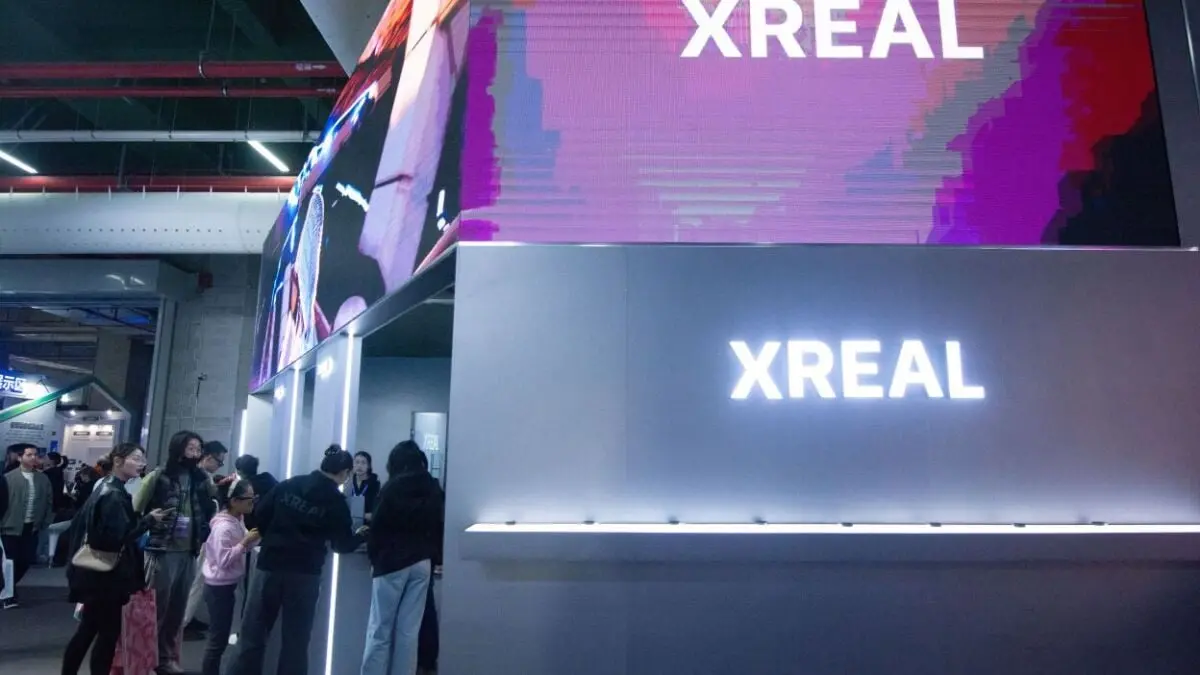
Xreal is taking a bold step into the affordable segment of the augmented reality (AR) glasses market with the introduction of the a01, a $299 pair of display glasses launching under a new sub-brand called X by Xreal (xbx). The company announced the device in a press release shared with technology media, revealing that it will arrive in the United States in July. This move places Xreal in direct competition with other budget AR glasses such as the TCL RayNeo Air 4 Pro, which also launched at $299 earlier this year and brought HDR10 support to the category for the first time.
What the X by Xreal a01 Offers
The a01 functions primarily as a wearable USB-C tethered monitor, similar to Xreal's existing product lineup. Users connect the glasses to a compatible smartphone, laptop, or gaming handheld to project a virtual display in front of their eyes. However, to achieve the $299 price point, Xreal has made some compromises compared to its higher-end models like the Xreal One Pro and the Xreal 1S. The field of view is 50 degrees, which is slightly narrower than the 52 degrees offered by the One Pro. Additionally, the a01 lacks the dimming lens found on pricier models—a feature that helps block out the real-world background for a more immersive experience—and it does not include the custom chipset that locks the virtual display in space, meaning the image will move with the user's head rather than staying anchored in the environment.
Where the a01 excels is brightness. The micro OLED panels push significantly higher luminance than previous Xreal hardware, reaching up to 1,600 nits with 14 levels of adjustment. This is substantially higher than the typical 500 to 700 nits found on earlier Xreal glasses. The addition of HDR10 video support further enhances the visual experience, allowing for better contrast and color accuracy when watching HDR content. The entire frame weighs under 65 grams, making it comfortable for extended wear. An "anti-shake" mode is also included to smooth out video playback during movement, which is particularly useful for watching content while commuting or in bumpy transportation.
Swappable Faceplates: A Design Statement
The most visually striking feature of the a01 is its swappable faceplates. The glasses come with snap-on magnetic faceplates that allow users to switch between clear lenses and sunglass-style tints on the fly. This design choice gives the budget product a touch of personalization and practicality that higher-priced models often lack. For example, a user can wear the clear faceplate indoors for productivity tasks and swap to the dark tint when stepping outside, all without carrying an extra pair of glasses. It is a small detail, but it transforms the a01 from a purely utilitarian gadget into a fashion-conscious accessory. The faceplates can be purchased separately, offering even more customization options.
Comparison with Competitors
The AR glasses market has seen a flood of affordable options recently. TCL's RayNeo Air 4 Pro set a benchmark at $299 with HDR10 support and a lightweight design. Other competitors include the Viture One XR glasses and the Xreal Air 2 series, which typically retail for $399 to $449. The a01 matches the $299 price point of the RayNeo Air 4 Pro but offers a higher peak brightness and the unique faceplate system. However, the RayNeo Air 4 Pro includes electrochromic dimming, which the a01 lacks. Both models have a 50-degree field of view, making them comparable in immersion. Xreal's decision to drop the spatial anchor chipset places the a01 in a different category—it is more of a basic wearable monitor rather than a true spatial computing device.
Background on Xreal and the X by Xreal Sub-Brand
Xreal, formerly known as Nreal, has been a key player in the consumer AR space since its founding in 2017. The company gained early attention with the Nreal Light, a pair of glasses that offered spatial computing features at a relatively accessible price. Over the years, Xreal has evolved its product line to include the Xreal Air, Xreal Air 2, and the premium Xreal One series. The creation of the X by Xreal sub-brand signals a strategic shift toward targeting budget-conscious consumers and expanding market share. The sub-brand is designed to offer more affordable hardware without compromising core display quality. The a01 is the first product under this new label, and it carries the X by Xreal branding on the frames and packaging. Xreal has also opened an English-language website for the X by Xreal brand, though the "Shop" button currently links to a Chinese order page, indicating that the company is testing the waters internationally before a full rollout.
Use Cases and Target Audience
The a01 targets users who want a large, private screen for productivity, entertainment, or gaming without spending $1,000 or more on premium AR headsets. Because it uses a USB-C connection, the a01 works with almost any modern smartphone, laptop, or handheld PC like the Steam Deck or ASUS ROG Ally. Users can watch movies, read documents, code, or play games on a virtual 130-inch screen. The high brightness ensures the display is visible even in well-lit environments, and the lightweight construction makes it suitable for long sessions. The lack of an integrated battery or processing unit means the a01 relies entirely on the connected device for power and content, but this also keeps the weight down and the price low. Anti-shake mode enhances the experience for passengers in cars, trains, or planes, reducing motion sickness often associated with VR/AR headsets.
Market Implications and Future Outlook
The launch of the a01 at $299 puts pressure on other AR glasses manufacturers to either lower prices or add compelling features. With HDR10 support and extreme brightness becoming standard even in budget models, the differentiation will increasingly depend on design, comfort, and ecosystem integration. Xreal's swappable faceplates are a clever way to offer personalization that competitors have not yet adopted. The decision to create a separate sub-brand also allows Xreal to experiment with pricing and features without diluting its premium lineup. If the a01 succeeds, it could pave the way for more advanced but still affordable X by Xreal products, possibly including models with spatial anchoring and dimming at a lower cost. The AR glasses market is projected to grow significantly over the next five years, and affordable entry points like the a01 will be crucial for mass adoption.
The a01 ships to China first, with US availability in July. Pre-launch buzz suggests strong interest from tech enthusiasts and early adopters who have been waiting for sub-$300 AR glasses with decent display quality. The English website is live but still directs purchases to China, so international buyers may need to wait for more information on local pricing and shipping. Xreal has not yet announced a launch date for other regions, but the company has traditionally expanded to Europe and parts of Asia within months of a US release. The a01 is available for pre-order in China through the official X by Xreal store.
Source: Mashable News