

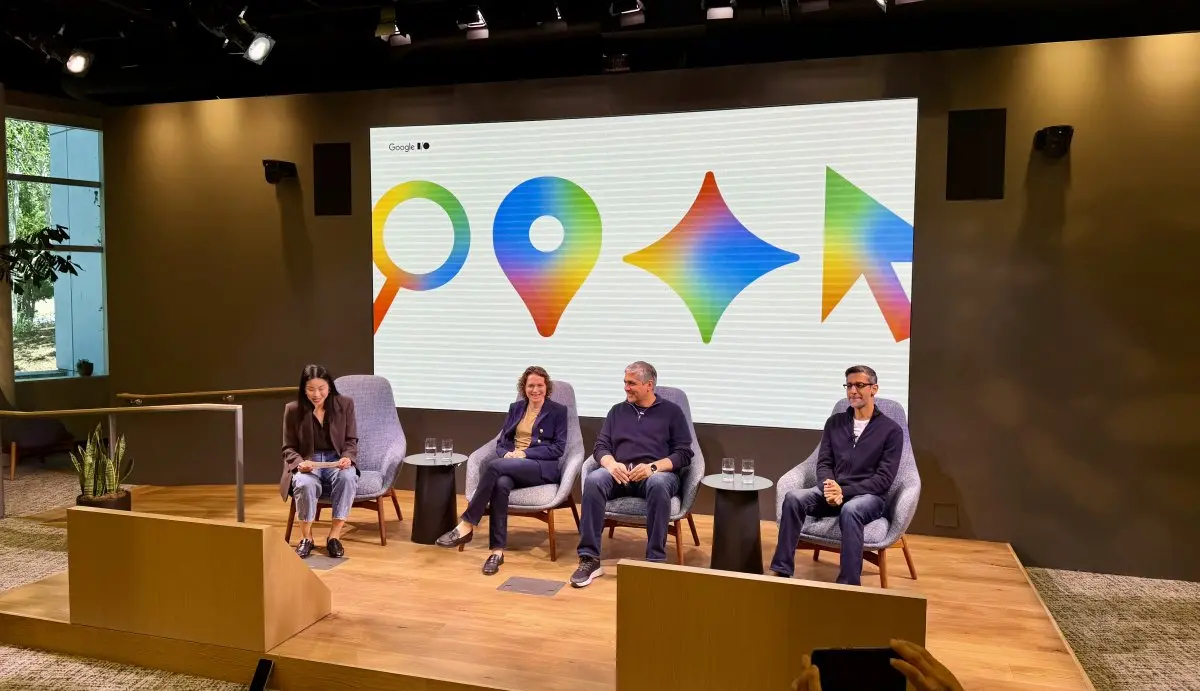
At the closing session of Google's annual developer conference, I/O 2026, CEO Sundar Pichai inadvertently confirmed what many tech enthusiasts had been eagerly anticipating: new Pixel smartphones are on the way. During a Q&A with journalists, a Canadian reporter caught Pichai off guard after he seemingly let the news slip. With a wry smile, Pichai admitted, 'I will be more careful with my wording in the future.' The incident highlights the intense secrecy surrounding product launches in Silicon Valley, even for a company as large as Google.
The Slip and Its Context
The accidental confirmation came as a surprise, given that the main keynote on Tuesday was entirely focused on artificial intelligence. Pichai and Koray Kavukcuoglu, Chief AI Architect at Google DeepMind, presented a unified vision where AI permeates every aspect of life. They emphasized that I/O 2026 would be remembered as the year of 'agentic transformation' — moving from simple queries and conversations to products that take autonomous actions. The foundation for this shift, they argued, lies in Google Search, the Gemini AI model, the Chrome browser, and the Android operating system.
However, the stray comment about Pixel phones stole the spotlight from the AI announcements. The new Pixel devices are expected to be among the first to deeply integrate the agentic capabilities Pichai spoke about. While details remain scarce, industry analysts predict a strong emphasis on on-device AI processing, leveraging Google's Tensor chips to run Gemini models locally for faster and more private interactions.
Agentic AI: The Core Theme
Pichai used the term 'agentic transformation' repeatedly, painting a picture where AI does more than answer questions — it executes tasks. For example, an AI agent could book a flight, manage a calendar, and order groceries based on a single request. This vision requires tight integration across Google's ecosystem, and the company is investing heavily in making it a reality. During the keynote, demos showed Gemini planning entire travel itineraries, managing smart home devices, and even drafting complex emails after reading a user's inbox.
The CEO also stressed efficiency gains. 'We are constantly striving for new efficiencies in our AI models, so that cutting-edge capabilities become affordable for everyone,' he said. This echoes a broader industry trend where companies are optimizing large language models (LLMs) to reduce computational costs without sacrificing performance. Google, for instance, has introduced smaller versions of Gemini that run on the latest Android phones, enabling on-device AI without constant cloud connectivity.
Apple: Friend or Foe?
One of the most anticipated topics at I/O 2026 was the deepening partnership with Apple. In about two and a half weeks, Apple's Worldwide Developers Conference (WWDC) is expected to announce the fruits of a collaboration to integrate Google's Gemini AI model into Apple's operating systems like iOS. Pichai was tight-lipped but indirectly confirmed the integration. 'Google is a platform provider,' he said, drawing a parallel to Samsung selling components to Apple while remaining a competitor. 'Similarly, our relationship with Apple is both cooperative and competitive.'
This dual nature is not new for Google. Already, Apple uses Google as its default search engine in Safari, a deal worth billions annually. Now, with AI, the partnership extends further. However, both companies fiercely compete in hardware — Google's Pixel line goes head-to-head with the iPhone — and in services like cloud storage and digital assistants. The integration of Gemini into iOS could give Apple users advanced AI features, but it also deepens Apple's reliance on a direct rival. Industry observers speculate that Apple chose Gemini because of its strong privacy track record and flexibility, but some worry about data sharing between the two tech giants.
Open Source and the Chinese Challenge
When asked by Chinese journalists about open-source AI models like DeepSeek from China, Pichai and Kavukcuoglu struck a diplomatic tone. Kavukcuoglu explained that Google pursues both proprietary Gemini models and open-source approaches. He suggested that the emergence of competitive Chinese models enriches the global AI ecosystem rather than threatening it. 'We see this as a positive development,' he said. 'More players mean more innovation, and ultimately better solutions for users worldwide.'
This stance is strategic. China has rapidly become a powerhouse in AI, with companies like Baidu, Alibaba, and DeepSeek releasing models that rival Western counterparts. By embracing openness, Google positions itself as a global collaborator rather than a fortress. However, the company also faces pressure from US regulators to limit technology transfers to China. Pichai’s comments suggest Google wants to keep scientific exchange alive even amid geopolitical tensions.
Investments and Future Costs
Pichai acknowledged that the massive investments in AI — Google has committed tens of billions of dollars to data centers, chips, and research — are necessary seed capital. He compared it to the early days of electric vehicles and smartphones, where high upfront costs eventually led to lower prices as technology matured. 'We believe the cost of AI will come down over time, making it accessible to everyone,' he said. However, the CEO avoided committing to a timeline for reducing spending. 'The market is still evolving, and we need to maintain our competitive edge,' Pichai noted.
This uncertainty reflects the volatile nature of the AI industry. Competitors like Microsoft, Amazon, and Meta are also pouring billions into AI. Google’s challenge is to prove that its investments deliver superior returns, especially as Wall Street grows wary of boundless spending. The company’s cloud division, Google Cloud, has become a major growth driver, and integrating Gemini into enterprise offerings could justify the capital outlay.
Meanwhile, Google’s hardware division — responsible for Pixel phones, the Pixel Tablet, and the Pixel Watch — stands to benefit from these AI advances. The upcoming Pixel phones will likely showcase on-device AI that can translate conversations in real time, summarize meetings, and generate artistic edits from photos. These features aim to differentiate Pixel from the iPhone and Samsung Galaxy devices, which also boast AI capabilities.
Historical Context: Google I/O and the Rise of AI
Google I/O has always been a platform for the company’s most ambitious projects. From Android’s early days to the launch of Google Glass, the conference has reflected the industry’s shifting priorities. In 2016, Google announced a shift to 'AI first.' By 2023, generative AI took center stage with the introduction of Bard, which later became part of Gemini. The 2026 edition marks a pivot from chat-based AI to autonomous agents.
The agentic approach builds on years of research in reinforcement learning, natural language understanding, and robotics. Google DeepMind, since its acquisition in 2014, has been a leader in this space. Their AlphaGo program defeated world champions in Go, and their work on protein folding (AlphaFold) revolutionized biology. Now, DeepMind’s expertise is being funneled into consumer products. Kavukcuoglu highlighted that 'agentic AI is the culmination of everything we have learned so far.'
Privacy and Ethical Considerations
With great power comes great responsibility. As AI agents gain the ability to act on behalf of users, concerns about privacy, security, and misuse intensify. Pichai assured the audience that Google builds safety into its models from the ground up. 'We have strict safeguards to ensure AI acts within user-defined boundaries,' he said. The company has published guidelines on responsible AI development and has an internal review board for high-risk applications.
Nevertheless, skeptics worry that agentic AI could lead to unintended consequences, such as unauthorized purchases or data leaks. Google’s Pixel phones, for instance, would need to handle sensitive information — like bank details and personal schedules — locally or in encrypted cloud environments. The company’s track record with privacy has been mixed; while it emphasizes user control, it also relies on ad revenue, which depends on data collection. The new AI features must balance utility with trust.
Conclusion-Free Final Analysis
As the Google I/O 2026 conference concluded, the narrative was clear: AI is no longer just a feature, it is the operating system of the future. Pichai’s unintended revelation about Pixel phones only underscores how deeply AI is woven into Google’s hardware roadmap. The company’s partnership with Apple, its openness to global competition, and its relentless pursuit of efficiency all point to a company that is simultaneously consolidating its strengths and expanding its reach. With the hardware expected later this year and software updates rolling out across Android and Chrome, users can expect a new era of intuitive, proactive technology — one that Pichai himself might have preferred to announce on his own terms.
Source: heise online News