

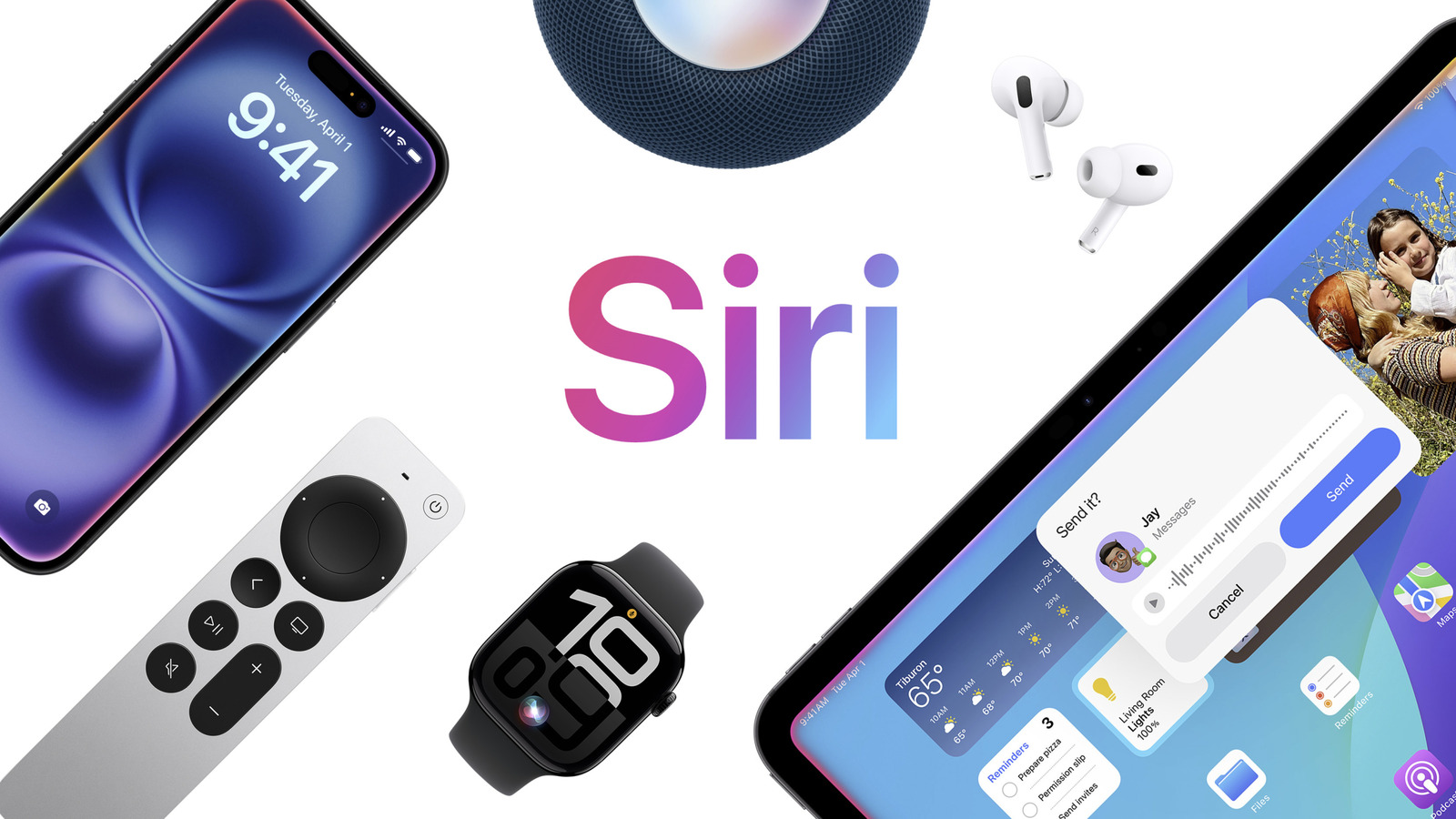
In a landmark class-action settlement, Apple has agreed to pay $250 million to resolve allegations that it deceived US iPhone buyers by promising an AI-powered Siri that never arrived on time. The lawsuit, filed in early 2025, claimed that Apple aggressively marketed a more personalized and context-aware version of Siri alongside Apple Intelligence at WWDC 2024, yet failed to deliver the feature to consumers more than two years later. The settlement, first reported by The Financial Times, covers owners of the iPhone 16 lineup and iPhone 15 Pro models, potentially affecting millions of customers. Pending judicial approval, the agreement would provide financial compensation without requiring Apple to admit any fault or liability. This case highlights growing tensions between tech companies and consumers over the marketing of artificial intelligence features that remain incomplete or delayed.
The Background of the Lawsuit
The lawsuit originated from Apple's June 2024 presentation at its Worldwide Developers Conference (WWDC), where executives unveiled a revamped Siri capable of understanding the context of content on a user's device and performing complex actions within apps. For example, the new Siri could locate a specific photo taken last summer, summarize a friend's text message, or book a restaurant reservation directly from a travel email — all without requiring manual navigation. Apple marketed these capabilities as a cornerstone of its Apple Intelligence platform, a suite of AI tools that also included text editing, image generation, and ChatGPT integration.
iPhone 16 models, launched in September 2024, were prominently advertised as the first iPhones built from the ground up for Apple Intelligence. Promotional materials and television commercials repeatedly showcased Siri's new abilities. However, over the following months, Apple rolled out only partial features of Apple Intelligence — such as Writing Tools for proofreading and rewriting text, Genmoji for custom emoji creation, and limited ChatGPT integration — while the advanced Siri remained absent. By late 2024 and early 2025, consumer frustration grew as software updates repeatedly failed to include the promised assistant.
In March 2025, Apple finally acknowledged the delay publicly, stating that the improved Siri would not arrive until at least 2026. This admission came over five months after the iPhone 16 launch, leading to accusations that Apple had sold devices based on unfulfilled promises. According to court filings, Apple had internally known about significant development challenges well before the iPhone 16 release, yet continued its advertising campaign. The lawsuit alleged fraud, false advertising, and violations of consumer protection laws.
Details of the Settlement
The $250 million settlement fund will be distributed among eligible class members — US residents who purchased an iPhone 16, iPhone 16 Plus, iPhone 16 Pro, or iPhone 16 Pro Max, as well as the iPhone 15 Pro and Pro Max models — between September 2024 and the settlement date. Claimants must submit proof of purchase to receive compensation. The exact payout per person will depend on the total number of claims, but early estimates suggest each eligible owner could receive between $50 and $150. Attorneys representing the class are seeking up to 30% of the settlement fund for legal fees, subject to court approval.
One of the most notable aspects of the settlement is that Apple does not admit any wrongdoing. The company maintains that its marketing was based on good-faith projections and that the delay was caused by unforeseen technical hurdles. In a statement, Apple said it “continues to believe in the transformative power of Apple Intelligence and Siri,” and reiterated its commitment to delivering the features. The settlement provides a pragmatic resolution without a protracted legal battle that could have exposed internal product development decisions.
The case also sheds light on broader industry practices: many tech companies announce AI features prematurely to gain a competitive edge, only to face backlash when delivery falls short. Industry analysts point out that Apple's aggressive timeline was likely driven by pressure to compete with AI leaders like Google, Microsoft, and OpenAI, which had rapidly mainstreamed generative AI through products like ChatGPT, Gemini, and Copilot.
The Technical Challenges Behind the Delay
Building a truly context-aware AI assistant is extraordinarily difficult. Apple's vision required Siri to process data across various apps and services — such as Mail, Messages, Photos, Calendar, and Maps — while maintaining strict privacy standards through on-device processing. Unlike cloud-dependent competitors, Apple emphasized that most Apple Intelligence tasks would run locally on the device's Neural Engine, a custom chip designed for machine learning.
However, developers encountered problems with inference latency, accuracy, and memory usage. On-device models large enough to understand natural language in context consumed too much battery and storage, while smaller models were not reliable enough for production use. Apple experimented with a hybrid approach, offloading complex queries to a secure private cloud known as “Private Cloud Compute,” but required extensive auditing and security certifications before it could be widely deployed. These engineering bottlenecks, combined with aggressive deadlines, led to the delay.
Reports indicate that Apple invested heavily in acquiring AI startups and hiring talent, but integration proved slower than expected. In early 2025, Apple entered into a partnership with Google to leverage its Gemini large language models for certain Siri capabilities. This move is seen as an admission that Apple's internal models were not ready on schedule. The partnership is expected to bring the new Siri to iOS 27, scheduled for release in fall 2026, alongside a host of other AI enhancements.
Impact on iPhone Sales and Apple's Reputation
The delayed Siri has undoubtedly affected iPhone sales. Although the iPhone 16 sold well initially, growth slowed in early 2025 as consumer enthusiasm waned. According to market research firms, many potential upgraders delayed purchases waiting for the AI features to materialize. Additionally, some iPhone 15 Pro owners reported feeling misled, as those devices were also marketed as “ready for Apple Intelligence.”
Apple's reputation for delivering polished, on-time software has taken a hit. Historically, the company has been praised for launching features only when they are ready, often years after competitors. The Siri fiasco represents a departure from that strategy. Analysts suggest that the pressure from investors and the stock market to show AI progress prompted Apple to announce incomplete features earlier than its usual practice. This has raised questions about Apple's internal project management and whether the company can maintain its premium brand promise.
The settlement does not prevent individual consumers from filing separate lawsuits, though the class-action agreement typically precludes future claims by members who do not opt out. Legal experts expect that the case will serve as a precedent for other tech companies that overhype AI capabilities.
What Comes Next for Siri and Apple Intelligence
With the settlement behind it, Apple is now focused on delivering the delayed features in iOS 27. The company has confirmed that the new Siri will be integrated with Google Gemini, providing advanced language understanding and generation. Users will be able to ask Siri to summarize long email threads, generate custom graphics inside apps, and perform cross-app tasks like sending a message to a friend with a specific photo attached. Additionally, Apple is reportedly developing its own large language model to reduce dependence on Google over time.
Apple Intelligence itself is expected to expand significantly. Future updates may introduce real-time translation, advanced health analysis using Apple Watch data, and deeper HomeKit automation. The company is also rumored to be working on an AI-powered home robot, though that project is years away from market. For now, iPhone users will have to wait until fall 2026 to experience the full vision of Siri that was originally promised in 2024. The settlement provides some compensation, but for many customers, the wait has eroded trust. Whether Apple can restore that trust depends on delivering, without further delay, on its long-overdue AI promises.
Source: Engadget News