

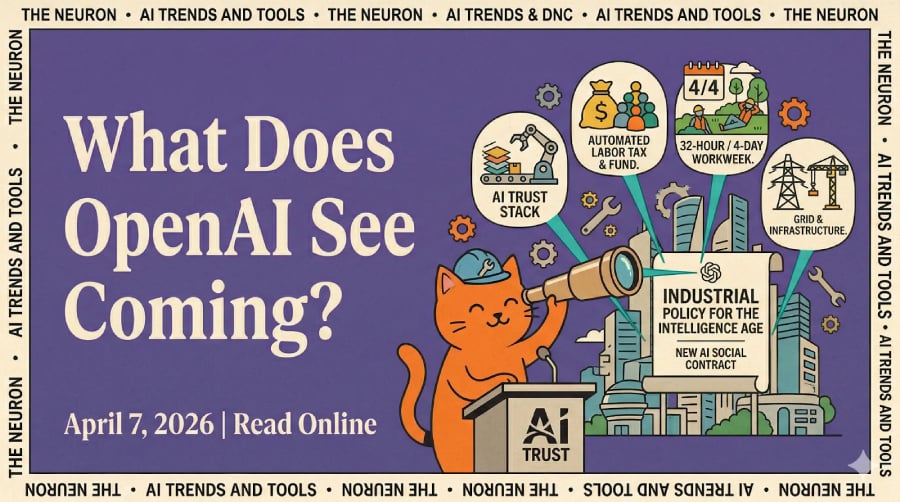
OpenAI has recently indicated that the next phase of artificial intelligence development may be upon us sooner than anticipated. Following a leadership reshuffle focused on the deployment of artificial general intelligence (AGI) and external discussions regarding its upcoming model, codenamed “Spud,” the organization released a compelling policy paper.
Titled “Industrial Policy for the Intelligence Age,” this 13-page document argues that minor adjustments to existing policies will not suffice if superintelligence begins to affect employment, taxation, public systems, cyber defense, and biosecurity simultaneously. The paper is presented as a starting point for discussion rather than a final proposal.
OpenAI draws parallels between the current situation and the Industrial Age, suggesting that just as the Progressive Era and the New Deal were necessary to redefine the social contract in response to electricity, mass production, and modern industry, a similarly ambitious approach may be required for AI.
A few proposals jumped off the page
- Shift the tax base away from labor and toward capital, corporate income, and even taxes associated with automated labor, while establishing public wealth funds to ensure citizens benefit from AI advancements.
- Transform productivity gains into additional leisure time, implementing trials for a 32-hour workweek and providing portable benefits and safety nets that automatically expand when AI disruption reaches certain thresholds.
- Enhance infrastructure and oversight, including faster grid expansion, the creation of an “AI trust stack,” improved auditing markets, incident reporting mechanisms, and increased public engagement in the governance of powerful AI systems.
This shift in rhetoric is significant; OpenAI is transitioning from its traditional role as a research lab to one that is actively seeking collaboration with policymakers. The organization is expressing concerns that the rapid pace of AI development could undermine programs funded by payroll taxes, disrupt labor market dynamics, and necessitate a reevaluation of how the benefits of AI are distributed.
This message is more substantial than the commonplace “robot tax” discussions circulating on the internet. OpenAI aims to elevate the dialogue from mere speculation to actionable policy, offering fellowships, research grants of up to $100,000, API credits up to $1 million, and planning a workshop in Washington, D.C.
Initial reactions to the paper have been noteworthy, with many commentators expressing surprise and highlighting the convenience of OpenAI's proposals. Axios described it as a tech giant outlining how governments should manage taxation, regulation, and wealth redistribution stemming from the very technology it is developing. Business Insider focused on the most provocative elements: taxes on automated labor, the establishment of a public wealth fund, and the potential for a four-day work week. Meanwhile, The Wall Street Journal viewed it as a strategic move by OpenAI to influence the ongoing AI policy debate.
While skepticism surrounding the motivations of OpenAI is justified, the urgency of the issues they raise cannot be overstated. The company’s proactive stance is crucial, as it encourages a scientific approach to the conversation rather than allowing it to be dominated by partisan politics.
Our take
The evolution of frontier labs from a mindset of “please don’t slow us down” to one of “let’s redesign labor, welfare, infrastructure, and oversight in light of our models” signals a paradigm shift. This discussion is no longer theoretical; it is overdue. The proactive engagement from OpenAI is welcomed, and it is hoped that others will join the dialogue as well. This moment calls for solutions rather than partisan squabbling.
Editor’s note: This content originally ran in a technology-focused newsletter. To read more from that publication, consider signing up for its newsletter.
Source: eWEEK News