

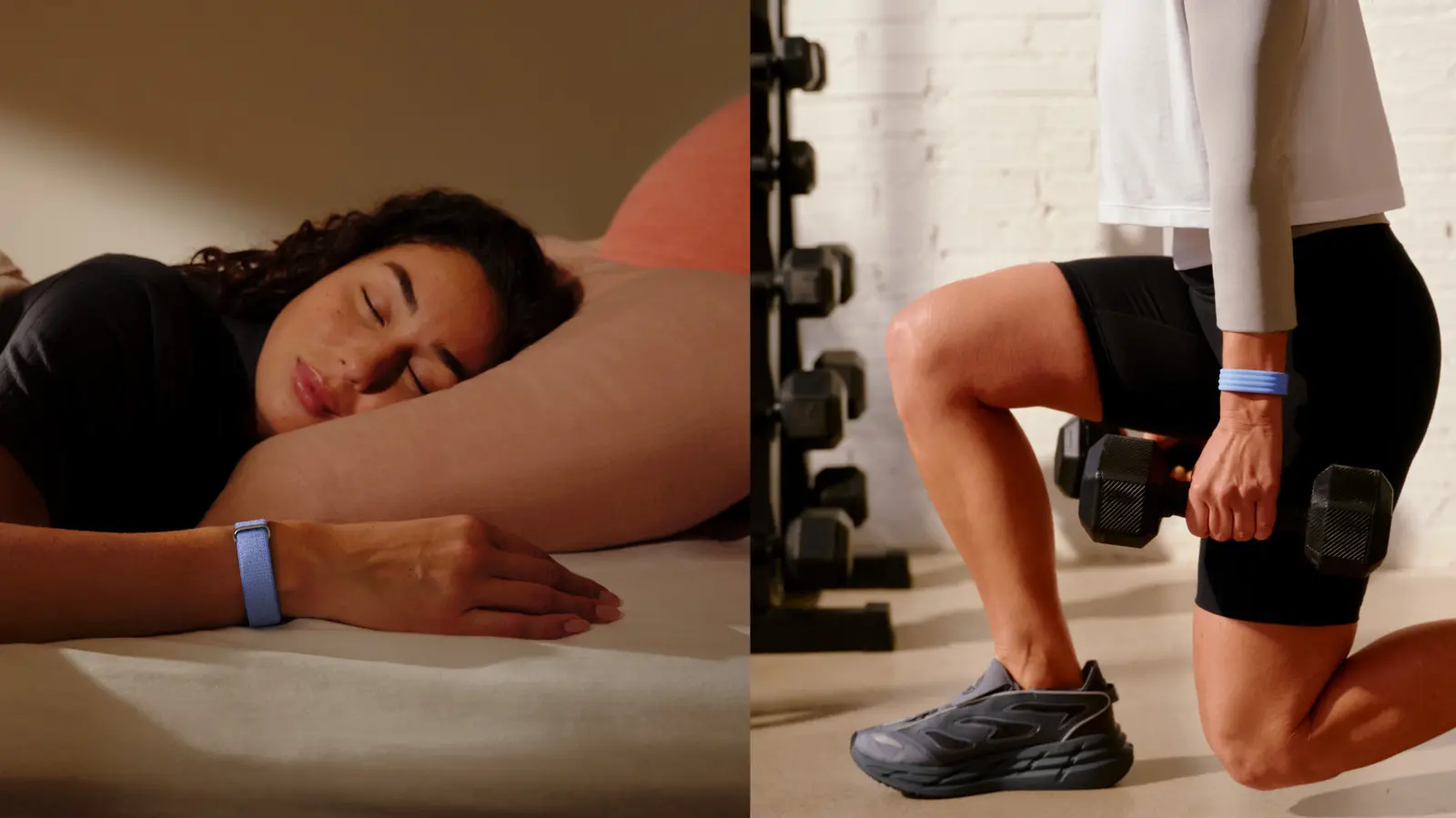
The Google Fitbit Air marks a significant departure from traditional smartwatches and fitness trackers. Following a teaser in March, the company officially launched this screenless wearable, which can be worn on a wristband, chest strap, or any accessory of your choice. At just $100, the Fitbit Air is designed to be a passive yet intelligent health companion, leveraging advanced AI to provide personalized insights.
The device is remarkably compact: 25% smaller than the Fitbit Luxe and half the size of the Inspire 3. Weighing only 12 grams with a band and 5.2 grams without, it promises a barely-there wearing experience. Google claims it was rated more comfortable than leading competitors in an independent consumer perception study conducted in 2025.
Core Health and Fitness Features
Without a screen or buttons, the Fitbit Air operates as a pure sensor that collects data continuously. It monitors heart rate around the clock, using Google's long-established algorithms to track sleep stages, assign a Sleep Score each night, and provide insights into heart rate variability (HRV). The device can also detect signs of atrial fibrillation (AFib) through irregular heart rhythm notifications.
For workout tracking, the Air automatically detects common activities like walking, running, cycling, rowing, and elliptical use. Users can manually start sessions for 40 additional types of exercise via the app, and log over 140 activities post-workout – including archery, badminton, and household chores. The built-in vibration motor enables silent alarms (Google's Smart Wake feature) that rouse you at optimal points in your sleep cycle.
Battery life is rated at up to a week, with fast charging providing one day of power in five minutes and a full charge in 90 minutes. The included magnetic charger is bi-directional, eliminating orientation fuss. The device is water-resistant to 50 meters.
The AI Difference: Google Health Coach
The "AI" in the name is not just branding. Central to the Fitbit Air experience is the Google Health Coach, a Gemini-powered conversational interface that debuted in public preview in October 2025. This AI analyzes your health data – including heart rate, sleep, cycle health, and even "vital medical information" – to create dynamic, tailored fitness plans. The coach adapts workout suggestions and proactive insights based on real-time performance and schedule changes, all while Google assures user data remains private and secure.
Google claims the Air's advanced machine learning models are 15% more accurate than previous models, and the improved Sleep Score better reflects recovery. This aligns with the company's broader push to integrate AI deeply into health and wellness.
Design, Accessories, and Pricing
Three wristband options are available at launch: a micro-adjustable Performance Loop Band, a sweatproof Active silicone band, and an Elevated Modern Band that doubles as a fashionable bracelet. A chest strap or other body placements are not yet available, but Google hints at future accessories.
A special edition collaboration with NBA star Steph Curry (Google's "Performance Advisor") features raised interior print for airflow, additional water-resistant coating, and custom design details, priced at $130. Each purchase includes three months of Google Health Premium. Pre-orders begin today, and devices ship on May 26.
The Fitbit Air represents a strategic move from Google to compete in the screenless wearable space, taking direct aim at devices like the Whoop strap. By combining miniaturized hardware, proven health algorithms, and generative AI, the company aims to offer a seamless, intelligent health tracking experience that fits effortlessly into daily life. As the wearable market evolves, the Air could redefine user expectations for passive, AI-driven health monitoring.
The launch also reflects Google's continued integration of Fitbit technology after its acquisition. The Fitbit Air builds on years of sensor and algorithm development while adding a new layer of AI-powered coaching that no other wearable currently offers at this price point. With its light weight, long battery life, and focus on comfort, the device is clearly designed for 24/7 wear – a key requirement for comprehensive health tracking.
Industry analysts have noted that the $100 price tag makes the Fitbit Air highly competitive, especially when compared to subscription-based competitors like Whoop. Google's strategy appears to be driving adoption through affordable hardware while monetizing through the optional Health Premium service and AI features. The company has not yet announced international availability, but the device is expected to launch in major markets later this year.
Source: Engadget News