

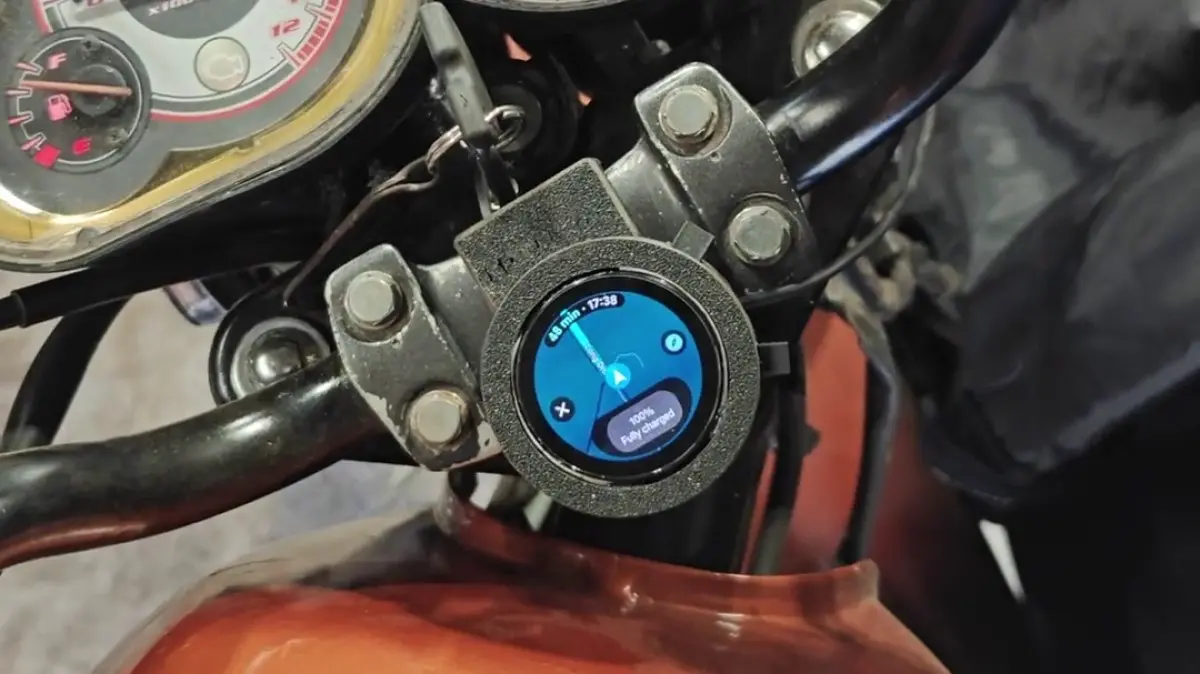
Turning an Old Galaxy Watch Into a Motorcycle Sat Nav
Smartwatches have evolved rapidly over the past decade, with devices like the Samsung Galaxy Watch 4 offering advanced health tracking, messaging, and app support. But what happens when you upgrade to a newer model? Instead of letting an old smartwatch gather dust, a Reddit user known as someones427 has found a clever second life for their Galaxy Watch 4: a dedicated satellite navigation display for their motorcycle. This project merges 3D printing, wireless charging, and creative repurposing to solve a common problem among riders—lack of a proper navigation screen on two-wheelers.
The Inspiration Behind the Build
Motorcycles typically have minimal instrument clusters, often limited to a speedometer, tachometer, and a few warning lights. Unlike cars, which can accommodate large touchscreen infotainment systems, motorcycles have limited real estate on handlebars. Adding an aftermarket GPS device or a phone mount can be bulky, vulnerable to weather, and aesthetically jarring. Someones427 saw an opportunity: an old smartwatch, with its compact round face, could serve as a discreet navigation aid. The Galaxy Watch 4, in particular, features a vibrant AMOLED display, GPS capabilities, and compatibility with Google Maps, making it a natural candidate for this DIY transformation.
The Hardware Setup
The core of the project is surprisingly simple. Someones427 designed and 3D-printed a custom enclosure that houses the Galaxy Watch 4 and its wireless charger. The charger’s magnetic base is used to attach the entire assembly to the motorcycle’s handlebar or dash area. This magnet provides a strong enough hold to keep the watch in place during rides, even over bumps and vibrations. The 3D-printed shell not only protects the watch from the elements but also ensures the charger remains aligned for continuous power. Keeping the watch charged is crucial because navigation apps drain battery quickly; without constant power, the watch would die within a couple of hours.
The watch runs Wear OS, which allows it to pair with an Android smartphone via Bluetooth. The phone provides the actual navigation data, while the watch displays turn-by-turn directions. This setup means the rider can keep their phone stored safely in a pocket or bag, reducing distraction and theft risk.
Software Challenges and Community Feedback
While the hardware integration is elegant, the software side is still a work in progress. In a video shared on Reddit, someones427 demonstrates the system working, but notes two major issues. First, there is noticeable lag between the phone’s navigation updates and the watch’s display. This delay can cause the map to fall out of sync, potentially leading the rider past a turn before the watch shows it. Second, the auto-rotate feature on the watch screen occasionally flips the map orientation at inopportune moments, likely due to the watch misinterpreting its physical orientation while mounted horizontally instead of on a wrist.
Other Redditors have jumped in with suggestions. Some recommend using a dedicated navigation app that allows locking screen orientation, such as Komoot or a custom Watch Face with map integration. Others suggest disabling auto-rotate in Wear OS settings or using a launcher that forces landscape mode. There is also talk of using a simple magnetometer hack to override orientation sensors. These community-driven solutions reflect the collaborative spirit of DIY electronics projects, where each challenge is met with creative problem-solving.
Broader Implications for Repurposing Wearables
This project is part of a larger trend of giving old smartwatches new jobs. We’ve seen watches turned into remote camera shutters, fitness trackers for pets, and even gear shift indicators for cars. The Galaxy Watch 4, with its robust hardware and open operating system, is particularly well-suited for such hacks. Its IP68 water resistance makes it durable enough for outdoor use, and its small size allows it to fit into tight spaces. For motorcycle enthusiasts, the round watch face mimics the classic analog gauges found on many bikes, creating a cohesive look that a square smartphone mount cannot achieve.
The concept also addresses an environmental concern: e-waste. Every year, millions of smartwatches are discarded because users upgrade to newer models. Projects like this one extend the useful life of the hardware, reducing the need for new manufacturing. While not everyone has access to a 3D printer, the growing availability of 3D printing services and pre-designed models on platforms like Thingiverse make such builds more accessible. Someones427 has hinted that they may release the 3D model files for others to replicate.
Technical Deep Dive: Making It Work Smoothly
To overcome the lag issue, one might consider using a more direct connection. Bluetooth has inherent latency, but using Wi-Fi Direct or even a USB connection via an OTG adapter could reduce delays. However, the Watch 4 lacks a USB port, so Bluetooth remains the only practical wireless link. Another approach is to use a navigation app that caches map data locally on the watch, so it doesn’t rely entirely on a phone connection. Wear OS already allows offline maps via Google Maps, but the feature is limited. Apps like Maps.me for Wear OS could provide full offline turn-by-turn navigation, potentially eliminating lag.
The auto-rotate problem is trickier. The Watch 4 uses a combination of accelerometer and gyroscope to detect orientation. When mounted horizontally on a motorcycle, the algorithm may interpret the orientation as sideways, triggering a rotation. One workaround is to mount the watch vertically or to use a third-party app that locks the display orientation. Another hardware-level fix is to physically secure the watch in a fixed orientation using the 3D-printed case, preventing any movement that could confuse the sensors. Someones427 is reportedly experimenting with a shim that keeps the watch from shifting inside the mount.
What This Means for the Future of Motorcycle Tech
Motorcycle manufacturers are slowly integrating more technology into their bikes, including TFT displays with smartphone connectivity. However, these systems are expensive and model-specific. A DIY solution like the Galaxy Watch mount offers a cost-effective alternative that works with any bike. As smartwatches become more powerful, their potential as secondary displays for vehicles grows. Apple Watch users have similarly repurposed their devices for car dashboards, and Google’s Wear OS continues to improve standalone capabilities.
The project also highlights the importance of modular design. With universal mounting standards like RAM mounts, riders can attach a 3D-printed watch holder without permanent modifications to their motorcycle. This approach preserves the bike’s original aesthetic and resale value while adding functionality. For those who enjoy tinkering, the satisfaction of creating something unique is a reward in itself.
Looking ahead, software updates from Samsung or Google could address some of the issues. For example, a future version of Wear OS might include a “kiosk mode” that locks the screen orientation and prevents accidental touches. Alternatively, a dedicated motorcycle navigation app optimized for smartwatch displays could emerge. Someones427 has already received encouragement from the community to continue refining the project. If the remaining bugs can be squashed, this DIY sat nav could become a popular blueprint for riders around the world.
In the meantime, the project stands as a testament to human ingenuity. It takes a piece of consumer electronics that most people would consider obsolete and gives it a new purpose. Whether you ride a cruiser, sportbike, or adventure bike, the idea of using a smartwatch as a navigation display is both practical and visually appealing. The round shape of the Galaxy Watch 4 blends seamlessly with traditional instrument clusters, and the magnetic mounting makes installation a breeze. With a bit of effort and a 3D printer, any rider can turn their old smartwatch into a sleek sat nav.
If you have an older smartwatch lying around, consider whether it could serve a similar purpose. Perhaps it could become a dedicated weather station for your bicycle, a music controller for your car, or a tiny second screen for your PC. The possibilities are limited only by your imagination and willingness to experiment. Share your own repurposing ideas with the wider maker community; you might inspire the next great DIY project.
Source: Android Authority News