

Olivia Rodrigo, the former Disney star who skyrocketed to fame with her emotionally raw breakup ballad 'Drivers License,' is once again making headlines. But this time, the conversation is not about her music. Instead, the internet is divided over a seemingly simple fashion choice: her babydoll dress.
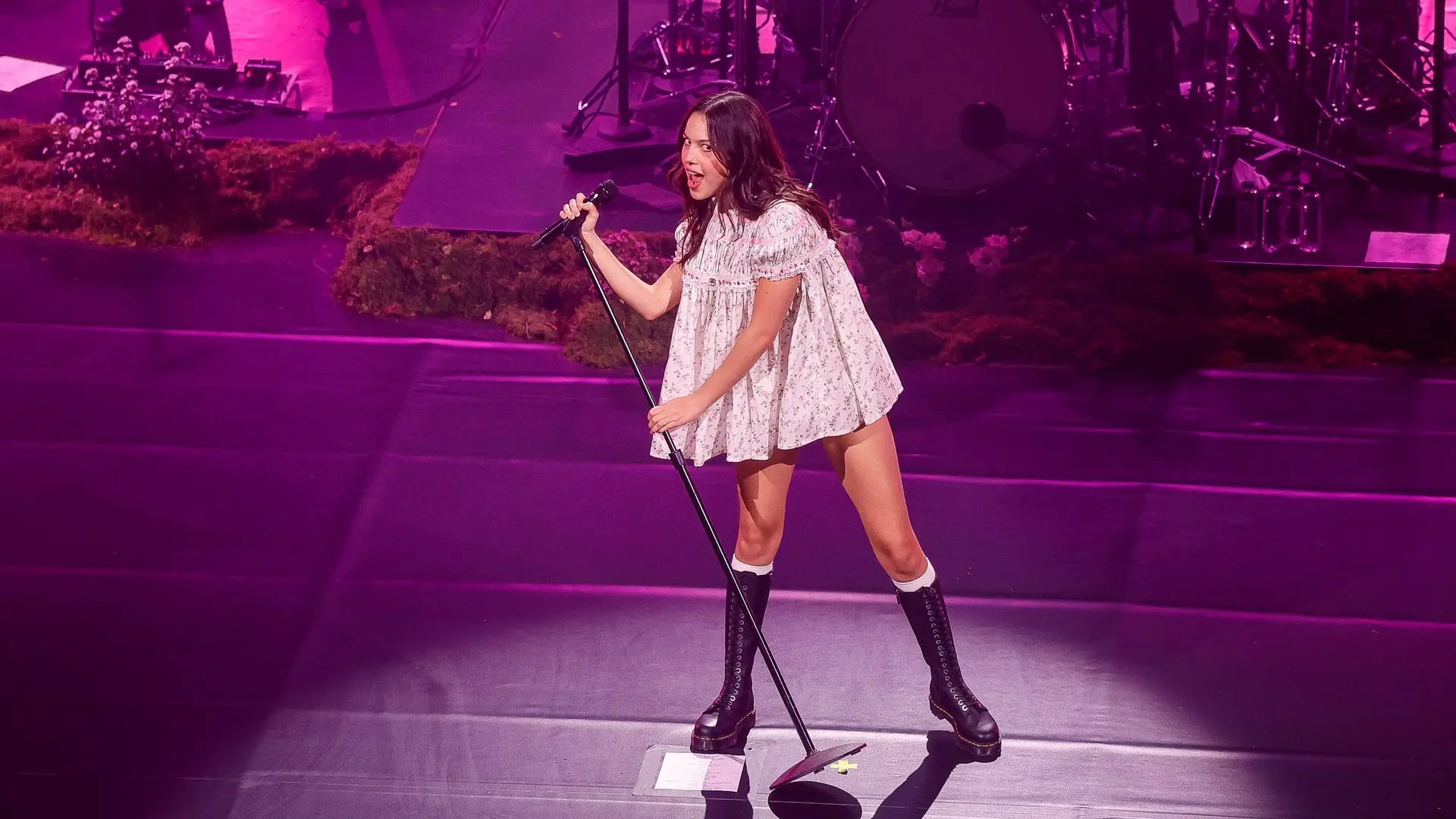
The controversy erupted after the release of the music video for her new single 'drop dead.' In the video, Rodrigo dances alone through the opulent halls of the Palace of Versailles, wearing a short blue-beige babydoll dress adorned with ruffles. The nostalgic, slightly blurred visuals and warm lighting evoke a vintage feel. Shortly after, she wore a similar silhouette—this time a floral version with puffy sleeves and paired with Dr. Martens boots—during a concert in Barcelona.
While many fans celebrated both the new music and the fashion, a vocal segment of the online community expressed discomfort. Comments on social media used terms like 'infantilization,' 'sexualization,' and even 'pedophilia' to describe the outfits. This intense reaction raises an important question: why has a garment with a long history in women's fashion suddenly become so problematic when worn by one of the biggest pop stars today?
From Disney to Pop Icon: Rodrigo's Rise
Olivia Rodrigo first gained recognition through Disney Channel productions such as 'Bizaardvark' and later starred in 'High School Musical: The Musical: The Series.' Her debut single 'Drivers License,' released in 2021, became a global phenomenon, breaking streaming records and cementing her as a voice of a generation. Her subsequent album 'Sour' and its follow-up 'Guts' showcased her ability to blend angsty lyrics with pop-punk and alternative influences. Throughout her career, Rodrigo has drawn stylistic inspiration from 1990s icons like Courtney Love and Kat Bjelland, leaders of the riot grrrl and alternative scenes. This influence is evident in her music and, increasingly, in her fashion choices.
The Babydoll Dress: A Brief History
The babydoll dress originated in the 1940s as a loose-fitting nightgown. It evolved into a fashion staple in the 1960s, popularized by style icons such as Jane Birkin and Twiggy. As noted by fashion magazines like Cosmopolitan, the dress represented a break from restrictive corsetry and rigid beauty standards. Women no longer had to emphasize their waistlines or conform to a specific body shape. The babydoll became a symbol of liberation and self-expression—a statement against societal expectations.
In the 1990s, the dress was adopted by the riot grrrl movement and associated with the 'kinderwhore' aesthetic. Artists like Courtney Love of Hole and Kat Bjelland of Babes in Toyland intentionally paired babydoll dresses with smeared makeup, torn tights, and a deliberately unpolished look. This was not meant to convey innocence or childlike vulnerability. Instead, it was a rebellious critique of traditional femininity and the male gaze. It challenged the idea that women must be perfectly groomed and demure.
Pop Star vs. Indie Icon: The Debate Intensifies
Olivia Rodrigo is no underground artist. She is a global pop superstar with a massive mainstream following. This distinction fuels part of the criticism. When riot grrrl musicians wore babydoll dresses, their intent was often read as subversive and anti-commercial. In contrast, Rodrigo's use of the same silhouette is seen by some as a calculated provocation designed to generate buzz. A comment on a post by the Instagram account 'diet_prada' encapsulates this view: 'I have no problem with a woman wearing a babydoll dress. But then she should still look like a woman. When you add bows and braids, you are clearly trying to infantilize yourself. Why would you want to appear like a child while wearing a dress that was originally a symbol of women's liberation?'
This sentiment reflects a deeper tension. Garcia argues that intent matters, but the public's reception is shaped by context. Rodrigo's youthful appearance—she is 21 years old—and her habit of wearing hair ribbons and braids in conjunction with the babydoll dresses amplify the perception of infantilization. Critics argue that she is deliberately blurring the line between adult sexuality and childlike innocence.
Why the Debate Is So Charged
The backlash cannot be separated from the broader cultural landscape. The extensive media coverage of the Jeffrey Epstein case and related issues has heightened public sensitivity around pedophilia and the sexualization of minors. As a consequence, many people now reflexively scrutinize anything that evokes youth or girlishness. This has created a climate where women's fashion choices are often viewed through a sexualized lens, regardless of the wearer's intent.
Psychologists and cultural critics note that the burden is frequently placed on the individual—especially women—to avoid 'provocative' dressing, rather than on society to stop sexualizing female bodies. In Rodrigo's case, instead of critically examining why a short dress reminiscent of childhood triggers sexual associations, the conversation focuses on her decision to wear it. This shifts responsibility away from the broader societal problem of objectification.
Furthermore, the babydoll trend is currently enjoying a mainstream revival. Stars like Ariana Grande, Sabrina Carpenter, and Kacey Musgraves have all embraced bows, ruffles, and vintage-inspired silhouettes. High-fashion houses such as Chloé and Valentino have incorporated similar elements into their runway collections. This widespread popularity suggests that the aesthetic resonates with contemporary audiences, challenging the notion that it is inherently problematic.
Career Highlights and Musical Evolution
To understand the context of Rodrigo's style, it's helpful to examine her artistic journey. After her breakout success, she released 'Sour' in 2021, earning seven Grammy nominations and winning three, including Best New Artist. The album featured hits like 'Deja Vu' and 'Good 4 U,' the latter showcasing her pop-punk influences. Her 2023 album 'Guts' continued this trajectory, with singles like 'Vampire' and 'Bad Idea Right?' exploring themes of heartbreak, anger, and self-discovery. The album received critical acclaim for its mature songwriting and genre-blending production.
Rodrigo has often cited female rock icons as inspirations, naming Alanis Morissette, PJ Harvey, and the aforementioned Courtney Love. This connection is explicit in her music videos and live performances, where she contrasts sweet, vintage dresses with raw, high-energy delivery. The 'drop dead' video at Versailles continues this juxtaposition: the opulent, feminine dress set against a massive, historic palace creates a surreal, almost jarring effect.
Analyzing the Outfits: More Than Just Fashion
The specific outfits in question are worth examining in detail. In the music video, Rodrigo wears a blue-beige babydoll dress with ruffled hem and short sleeves. The dress is fitted at the bust but flows loosely, emphasizing a youthful silhouette. She accessorizes with pink retro headphones, reminiscent of the 1990s. The overall look is playful and nostalgic—intentionally evoking an era associated with both innocence and rebellion.
During the Barcelona concert, she wore a floral babydoll dress with puffy sleeves and a cinched waist, layered over a white top. She paired it with chunky Dr. Martens boots, adding a tough, punkish edge. This combination—soft, romantic dress with heavy boots—is a classic style mashup that echoes the riot grrrl era. However, it also resonates with current trends in the fashion world, where 'coquette' and 'dolly' aesthetics have gained traction on platforms like TikTok.
The criticism often highlights the accessories: hair ribbons, braids, and bows. These elements, critics argue, push the outfit from 'adult vintage' into 'childlike.' But defenders point out that women have used such accessories for centuries without being accused of infantilization. The difference may lie in the sexualization of the female body—a dress that shows the legs might be fine on a child, but on an adult woman, it triggers different associations.
Double Standards and Cultural Context
There is also a noticeable double standard in how male and female pop stars are judged. Male artists often dress in ways that reference their youth—Mick Jagger, for example, famously wore ruffled shirts and tight pants well into his later years—without facing accusations of trying to appear prepubescent. Women, by contrast, are constantly policed for their clothing choices, especially if they deviate from age-appropriate norms.
Rodrigo is not the first female star to face this scrutiny. Britney Spears was famously criticized for her schoolgirl outfit in the '...Baby One More Time' video, which blended innocence and sexuality. Similarly, singers like Katy Perry and Miley Cyrus have faced backlash for mixing childlike aesthetics with adult themes. This pattern suggests that the issue is less about individual intent and more about society's discomfort with female sexuality that is not easily categorized.
Understanding the 'Kinderwhore' Legacy
The term 'kinderwhore' was coined in the 1990s to describe the provocative fashion of women like Courtney Love. It combined elements of children's clothing—babydoll dresses, Mary Janes, hair bows—with deliberately unkempt aspects, such as torn stockings and smeared lipstick. The goal was to critique the double standard that expects women to be both sexually attractive and demure. Love described her style as a way to 'look like a little girl who'd been in a fight.' This subversive edge is often lost when the aesthetic is adopted by mainstream pop stars, who are more polished and commercially packaged.
However, Rodrigo's own aesthetic incorporates elements of messiness and raw emotion. Her concerts often feature messy hair, guitar smashing, and sweaty, high-energy performances. She rarely presents herself as perfectly coiffed or doll-like; there is always a hint of angst. This aligns her more with the riot grrrl spirit than it might initially appear. The babydoll dress, in that context, becomes a symbol of contrast rather than mere cuteness.
The Role of Social Media and Outrage Culture
The debate around Rodrigo's dress is amplified by social media algorithms that favor controversy. A single critical comment can snowball into a widespread narrative. Moreover, the platform 'diet_prada'—which originally shared the critical comment—thrives on calling out perceived hypocrisy in fashion. Their post generated thousands of comments, many of which argued both sides. This polarization reflects a broader cultural divide: some see Rodrigo's fashion as a harmless expression of personal style, while others view it as a problematic regression.
Notably, many younger fans have defended Rodrigo, arguing that the older generation is reading too much into a simple fashion choice. They point out that the babydoll dress does not automatically sexualize someone—it is a dress, not a statement of intent. They also note that Rodrigo has been explicit about her influences and has never claimed her fashion is meant to be sexual. In interviews, she has spoken about her love for vintage clothing and her admiration for '90s fashion icons.
Where Do We Go From Here?
The controversy surrounding Olivia Rodrigo's babydoll dress is unlikely to fade quickly. It touches on deep-seated anxieties about youth, sexuality, and the representation of women in the public eye. Instead of focusing solely on what Rodrigo wears, perhaps it is more productive to examine why society is so quick to sexualize a garment that has a rich history of meaning—from liberation to rebellion. The conversation is not just about fashion; it is about how we interpret images and how we impose narratives on women's bodies.
As the music video continues to circulate and her tour progresses, Rodrigo has not explicitly responded to the backlash. But her actions speak louder: she continues to wear the babydoll dress, reclaiming it on her own terms. In doing so, she joins a long line of female artists who have used clothing as a tool for expression, even when it invites scrutiny. Whether or not one agrees with her choices, the debate has opened up a necessary dialogue about the intersection of fashion, feminism, and pop culture.
Source: KINO News