

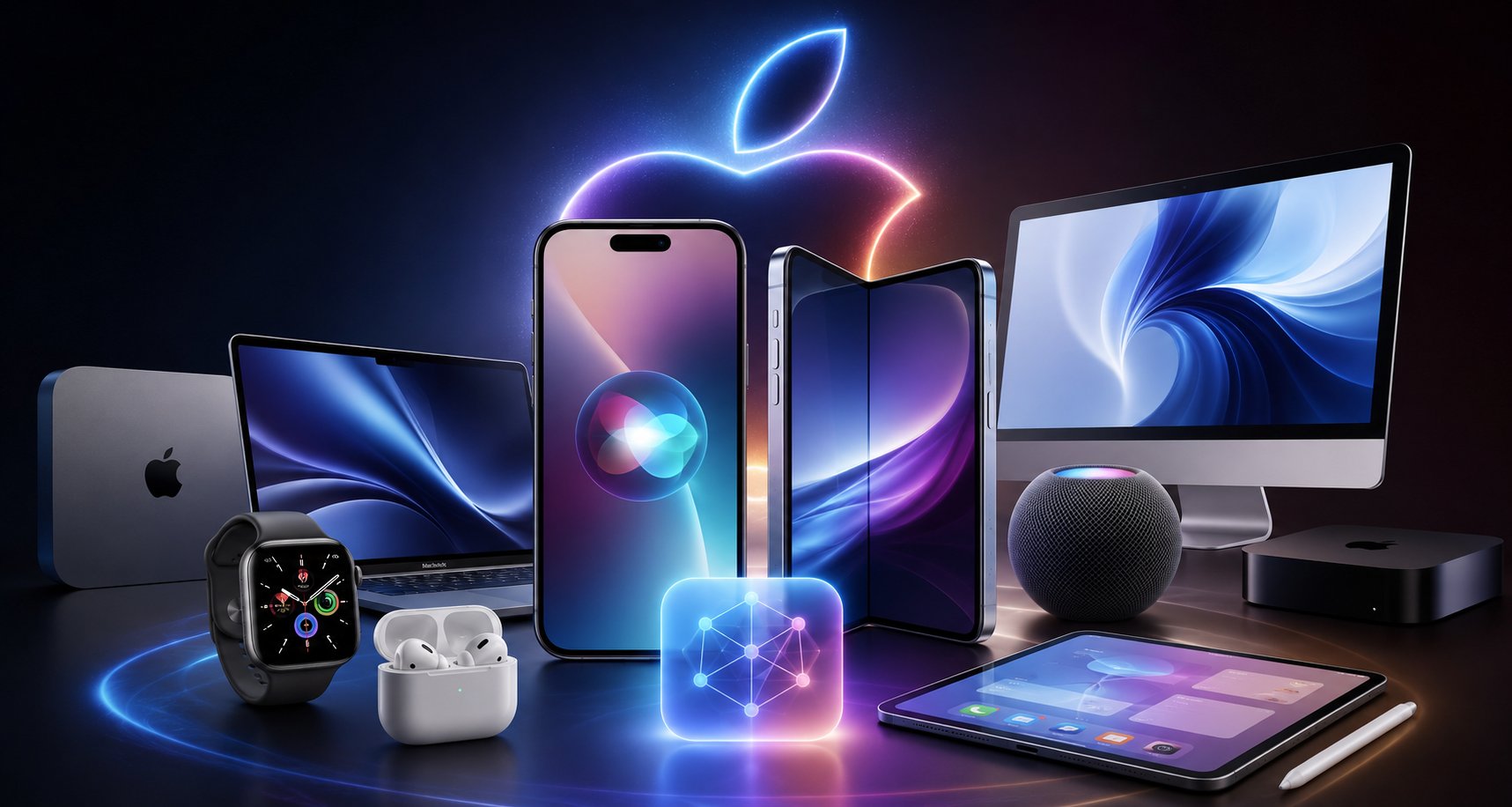
Apple's Worldwide Developers Conference (WWDC) 2026 is shaping up to be one of the most consequential events in the company's recent history. Scheduled for June, the annual gathering in Cupertino is expected to feature a sweeping overhaul of Siri, marking Apple's most aggressive push into generative artificial intelligence yet. Sources familiar with Apple's plans indicate that the company is preparing to integrate large language models (LLMs) deeply into its voice assistant, enabling more natural conversations, context-aware responses, and the ability to perform complex multi-step tasks.
The Siri Overhaul: A Long-Awaited Transformation
Siri, launched in 2011, has long lagged behind competitors like Amazon's Alexa, Google Assistant, and more recently, OpenAI's ChatGPT and Google's Gemini. Apple's initial focus on privacy and on-device processing limited Siri's capabilities, but the rise of generative AI has forced the company to reimagine its approach. At WWDC 2026, Apple is expected to unveil a new Siri that leverages on-device LLMs for faster response times while also tapping into cloud-based models for more complex queries. This hybrid architecture aims to preserve user privacy while delivering the kind of conversational fluency that users have come to expect from modern AI assistants.
Key features rumored for the new Siri include real-time language translation, advanced context retention across sessions, and the ability to control third-party apps through natural language commands. Apple is also reportedly developing a Siri SDK for developers, allowing apps to expose custom intents that Siri can invoke directly. This would be a significant departure from the current SiriKit, which offers only limited integration. If true, the new SDK could position Siri as a central interface for iOS, iPadOS, and macOS, rivaling the platform-level integration of Microsoft's Copilot.
AI Updates Across the Ecosystem
Beyond Siri, Apple is expected to announce a suite of AI-powered features across its operating systems. These updates are likely to be branded under a new umbrella term, perhaps "Apple Intelligence" or "Intelligent Features." In iOS 20 and iPadOS 20, users may see AI-enhanced photo editing tools, such as generative fill and object removal, similar to what Google offers with Magic Eraser. Apple's Photos app could also gain advanced search capabilities, allowing users to find images based on the content of the image, not just metadata.
For developers, Apple is preparing new machine learning APIs that simplify the integration of on-device AI into apps. The Create ML framework is expected to receive a major update, enabling developers to train custom models directly on Mac, iPhone, or iPad without sending data to the cloud. This aligns with Apple's privacy narrative and could accelerate the adoption of AI in third-party apps.
In the realm of productivity, Apple's iWork suite may get AI-powered writing assistants similar to Microsoft 365's Copilot. Pages could offer AI-generated document summaries, grammar suggestions, and even automatic layout adjustments. Keynote might include AI-generated slide designs based on a simple prompt. These features, while not revolutionary individually, represent Apple's strategy of embedding AI as a convenience layer rather than a separate product.
Hardware and Platform Advancements
While WWDC is primarily a software event, Apple often uses the platform to preview upcoming hardware. Rumors suggest a new Mac Pro with an M4 Ultra chip, which would be the most powerful Mac ever, designed for AI workloads. The chip is expected to feature a dedicated Neural Engine with significantly more cores than the current M3 Ultra, enabling faster on-device inference for large models.
Apple's Vision Pro headset is also expected to receive a software update that enhances its spatial computing capabilities with AI. Imagine using hand gestures and voice to interact with a virtual assistant that can overlay contextual information about your environment. Apple could also introduce new developer tools for building mixed-reality experiences, leveraging the Vision Pro's advanced sensors.
Developer Ecosystem and Swift Evolution
WWDC 2026 will spotlight the Swift programming language, with the release of Swift 7.0 expected to include native support for typed throws and a new concurrency model that simplifies async code. Apple is also working on a new framework for building AI-powered user interfaces, tentatively called 'SwiftUI AI', which would allow developers to create adaptive interfaces that respond to user intent and context.
Xcode 16 is rumored to incorporate an AI code completion engine, similar to GitHub Copilot, but designed to run on the developer's Mac for privacy. This would be a massive productivity boost for Apple developers, reducing boilerplate and catching potential bugs early.
Swift Playgrounds is also set for an update, bringing AI-assisted learning to the iPad. Students could ask natural language questions about Swift concepts and receive interactive examples that run in the Playground environment. This aligns with Apple's long-standing emphasis on education.
Privacy and Security in the Age of AI
Apple's commitment to privacy will remain at the forefront of its AI strategy. The company is expected to introduce a new privacy label for AI features, transparently indicating when data is processed on-device versus in the cloud. Additionally, Apple may unveil a new on-device encryption framework for machine learning models, ensuring that user data used for personalization never leaves the device.
The security enhancements will also extend to Siri. Users can expect granular controls over which apps and services Siri can access, along with an activity log that shows all interactions processed through the assistant. Apple will likely demo these features with a strong emphasis on user control.
Enterprise customers will benefit from new management capabilities in macOS 16, allowing IT administrators to deploy AI features selectively based on compliance requirements. Apple's partnership with IBM and Cisco may result in enhanced integration with enterprise security tools, further positioning the Mac as a viable platform for AI-driven corporate work.
Competitive Landscape and Market Impact
Apple's aggressive AI push comes at a time when competitors are racing to dominate the generative AI market. Google has integrated Gemini across its ecosystem, Microsoft has embedded Copilot into Windows and Office, and Amazon is revamping Alexa with LLMs. Apple's strategy of prioritizing on-device processing and privacy could differentiate it, especially among security-conscious consumers and enterprises. However, Apple must also address the perception that it is behind in AI. WWDC 2026 will be a critical test of whether the company can catch up.
Analysts predict that the new Siri and AI features could drive a significant upgrade cycle for iPhones and Macs, as older hardware may not support the new on-device models. This could provide a much-needed boost to Apple's hardware sales, which have faced headwinds due to market saturation.
Environmental and Sustainability Initiatives
Apple is expected to announce that its AI data centers will be powered entirely by renewable energy by 2027, building on its existing 2030 carbon neutrality goal. The company will also highlight how its on-device AI reduces the energy consumption associated with cloud inference, contributing to sustainability.
In the keynote, Apple may introduce a new recycling robot named 'Dave' to disassemble iPhone batteries more efficiently, leveraging AI to sort and process materials. This aligns with Apple's circular economy ambitions and reinforces its brand values.
Developers will also have access to new APIs for measuring the carbon footprint of their apps, with built-in suggestions for reducing energy usage. This 'green code' initiative could become a differentiator in the developer community.
What to Expect from the Keynote
The WWDC 2026 keynote is expected to run approximately two hours, featuring a mix of prerecorded segments and live demonstrations. Tim Cook will open the show with a focus on innovation and Apple's role in shaping the future of personal computing. The Siri overhaul is likely to be the centerpiece, with a dedicated segment showing the assistant's new capabilities. Apple executives from the software, hardware, and AI teams will take the stage to introduce new features, followed by developer sessions and a State of the Union address later in the week.
Beyond the big announcements, Apple will host over 150 lab sessions where developers can interact with Apple engineers in person and virtually. The Apple Design Awards will celebrate the best apps and games of the past year, with a new category for AI-enhanced design.
WWDC 2026 marks a pivotal moment for Apple. The company has the opportunity to redefine its position in the AI landscape, leveraging its immense ecosystem and privacy-first ethos. If executed well, the event could establish Apple as a leader in consumer AI, not just a follower. Developers, consumers, and investors will be watching closely as Apple unveils its most ambitious software updates in years.
Source: eWEEK News